The multi-platform sports performance application
Why?
Coaches, athletes, and sports organizations rely heavily on video, statistics, and performance analytics to improve individual and team performance. However, existing tools were fragmented, inconsistent across platforms, and varied dramatically depending on the user’s role and region.
The goal was to create a unified, intuitive, and flexible experience that could work seamlessly for coaches, athletes, parents, and administrators — on both mobile and desktop — while also supporting regional differences such as US high school sports, European clubs, and casual/amateur environments.
Challenge
The project faced several major challenges:
Different usage patterns: Coaches primarily rely on desktop for analysis, while athletes use mobile for personal progress and highlights.
White-labeling and multiple forks: Each league, school, club, or federation required customized versions of the app.
Inconsistent UX across platforms: Mobile and desktop had evolved independently for years.
High development overhead: Lack of a unified design system slowed down implementation and increased maintenance complexity.
Regional differences in sports culture: Varying expectations, analytics depth, and user behavior across countries.
Additionally, the app required role-specific UX:
Coaches → analytics, strategy, team and game review
Athletes → personalized clips, highlights, progress tracking
Parents → athlete tracking and simplified dashboards
The product also had to integrate an advanced AI assistant (Tactix) that helped coaches analyze games and teams, and helped athletes generate personalized highlights, playlists, and areas of improvement.
Research & Discovery
To design an experience suitable for multiple user types, regions, and platforms, I built a comprehensive research framework combining qualitative, quantitative, and comparative methodologies.
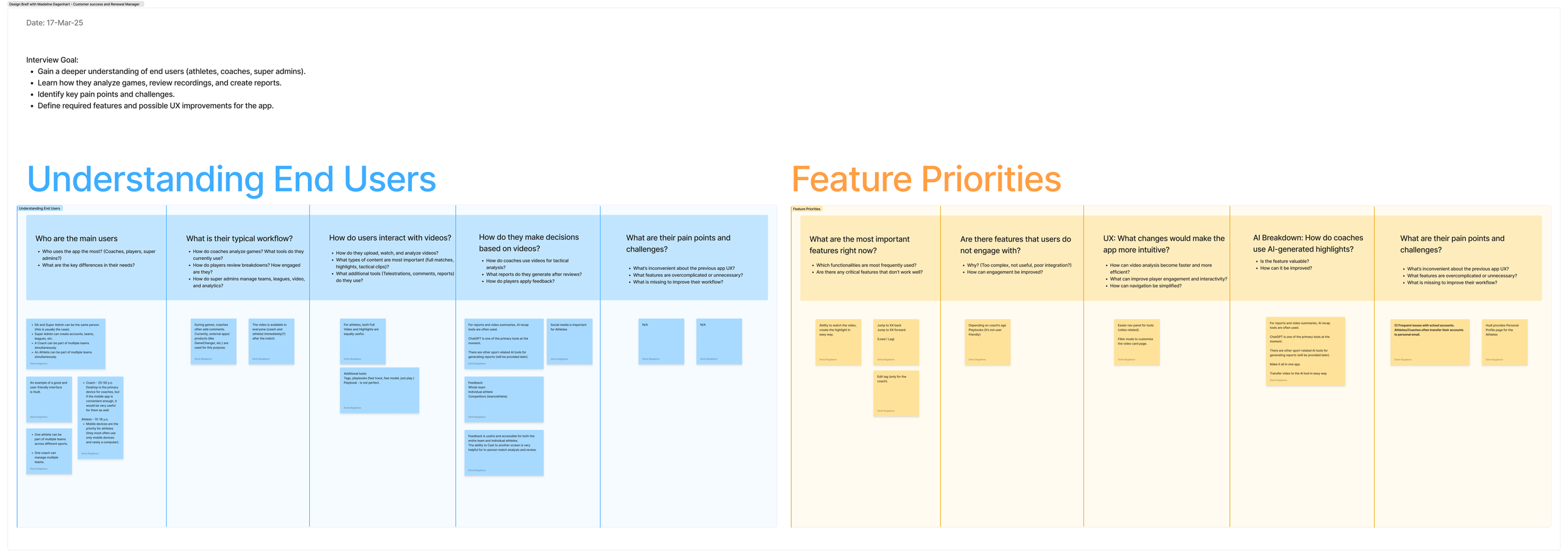
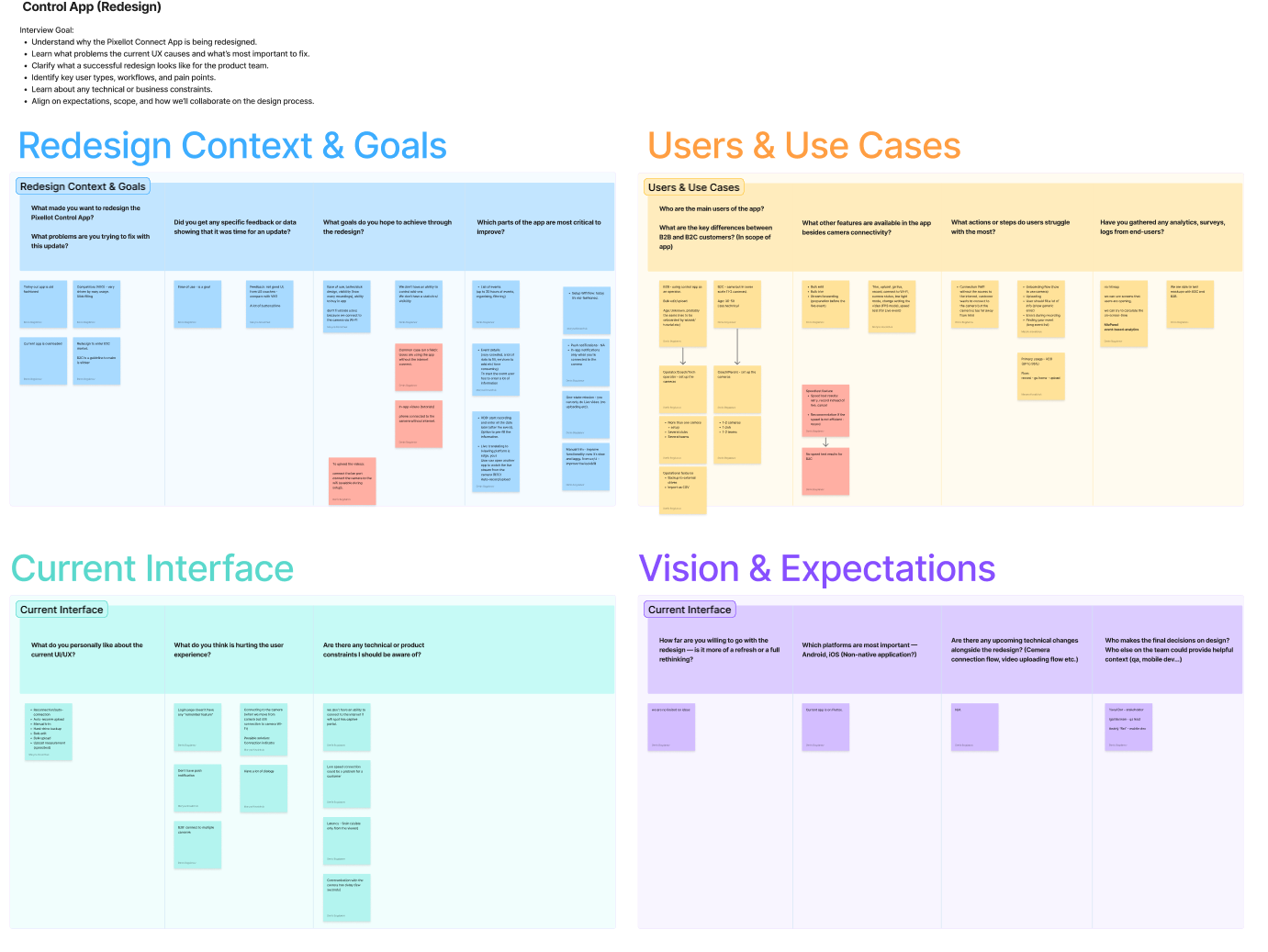
1. In-Depth User Interviews
We conducted structured interviews with:
Coaches: workflows for video review, playlist building, analytics, and strategy
Athletes: personal motivation, content consumption, learning behavior
Parents: tracking, game results, child-focused experience
Admins & athletic directors: school/league structures and white-label needs
Camera operators & video technicians: integration with recording workflows
The focus was on revealing real-world behavior, moments of friction, cross-platform touchpoints, and expectations for mobile vs. desktop.
2. Multi-User-Centric Design Approach
I developed a design model where each role received a tailored UX layer:
Coaches → deep analysis tools, multi-angle video review, dashboards
Athletes → progress-oriented UI, highlights, personalized feed
Parents → simplified tracking, media feed, performance summaries
Admins → management tools, role assignment, content control
This approach allowed us to structure the interface as modular blocks that could dynamically adapt based on role, region, or platform.
3. Competitor & Market Analysis
We benchmarked platforms across several domains:
Sports analytics (Hudl, Instat, Synergy, VEO, Spiideo etc)
Athlete-focused apps
High school sports platforms (US market)
Amateur and recreational sports tools
Consumer media applications
We evaluated role handling, navigation patterns, analytics visualization, content structures, and motivation mechanics.
4. Analysis of Existing White-Label Versions
We reviewed:
Usage metrics
Clickstream data
User logs
Feature adoption in different regions
UX differences between dozens of forks
This helped identify core functionality and eliminate legacy design inconsistencies.
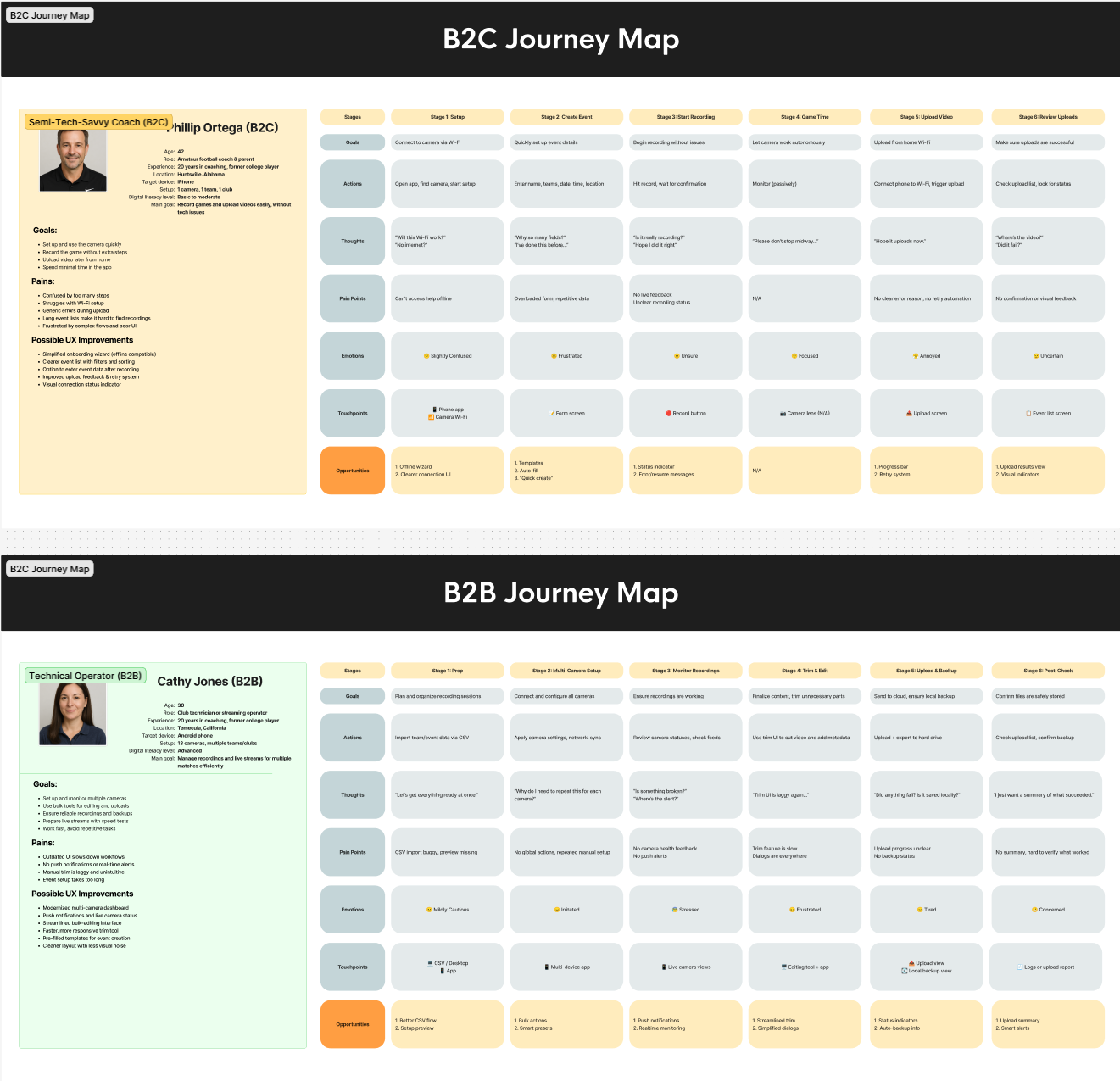
5. Scenario & Journey Mapping
I created detailed role-based user journeys, identifying:
Critical scenarios
Motivation triggers
Pain points
Context of use (stadium, home, school, training facility)
A key finding was that the interface had to be context-aware and prioritize different tasks depending on the role-device combination.
6. UX Framework & Architecture
Based on the research, I developed a scalable UX framework including:
Unified data model
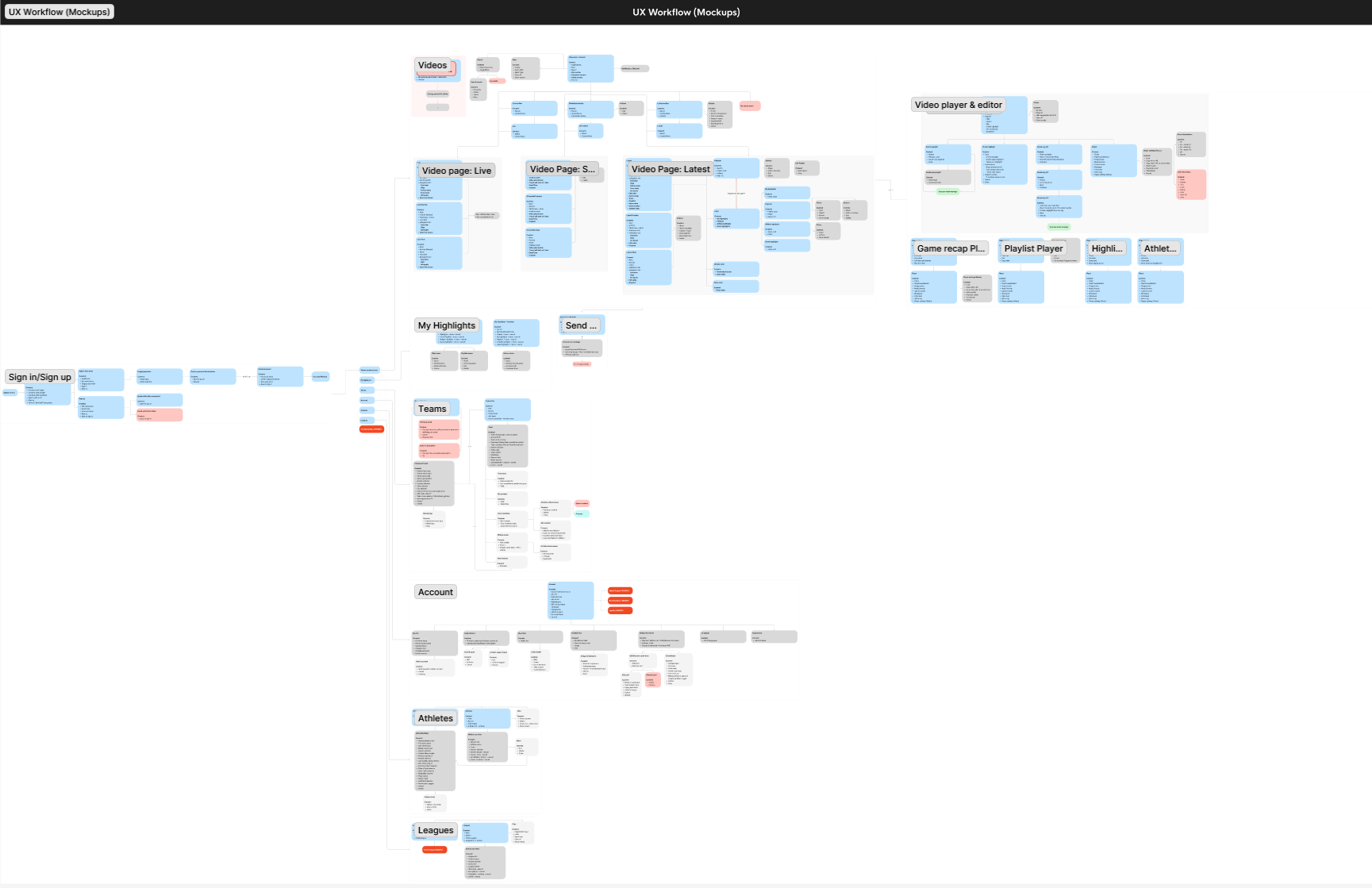
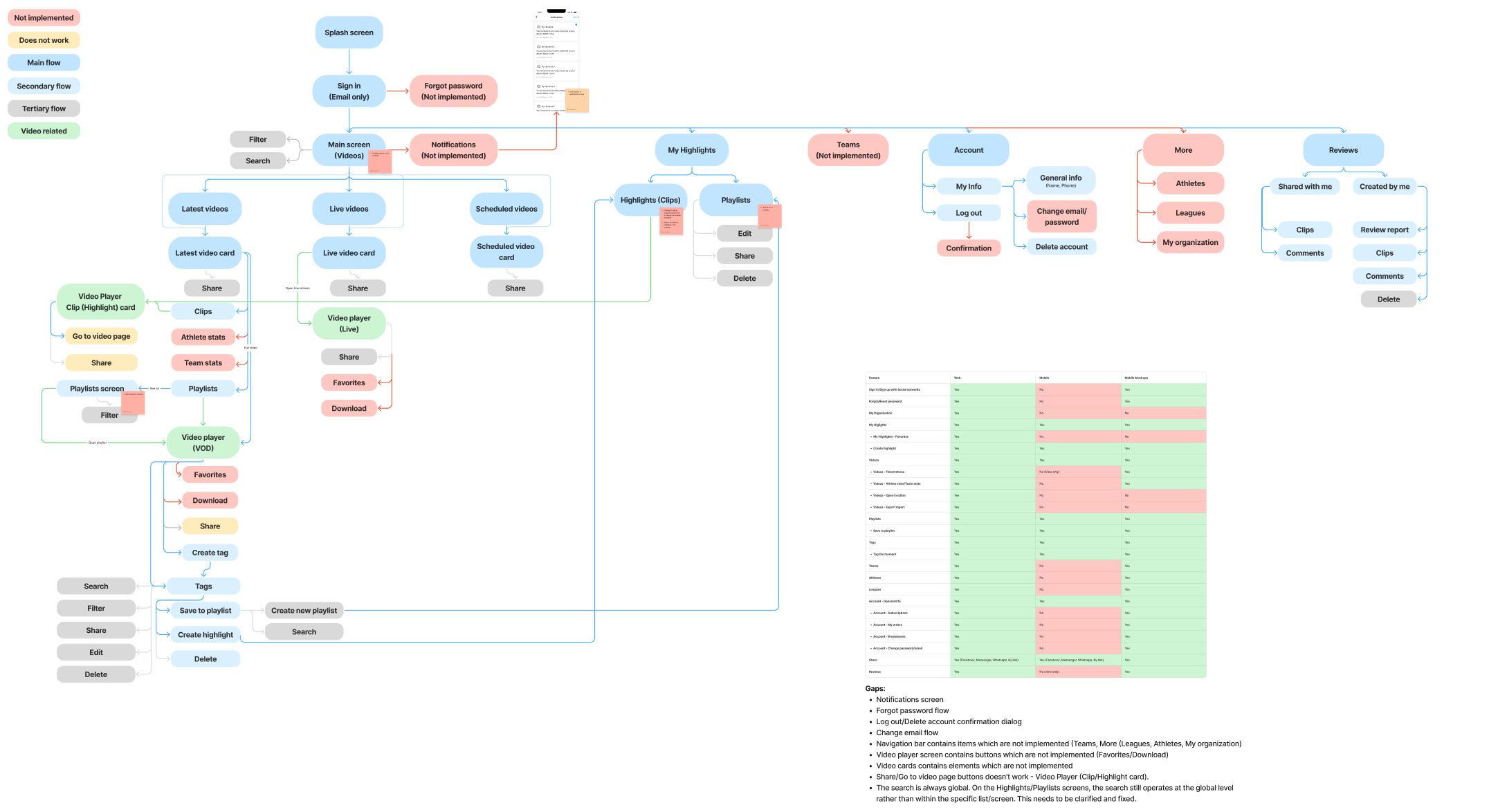
Flexible navigation structure
Role-specific dashboards
Video-centric architecture
Modularity to support white-label customization
Cross-platform consistency guidelines
This framework became the foundation for all subsequent design and development efforts.
Design & Prototyping
Wireframes
Created detailed low-fidelity wireframes outlining:
Role-specific navigation
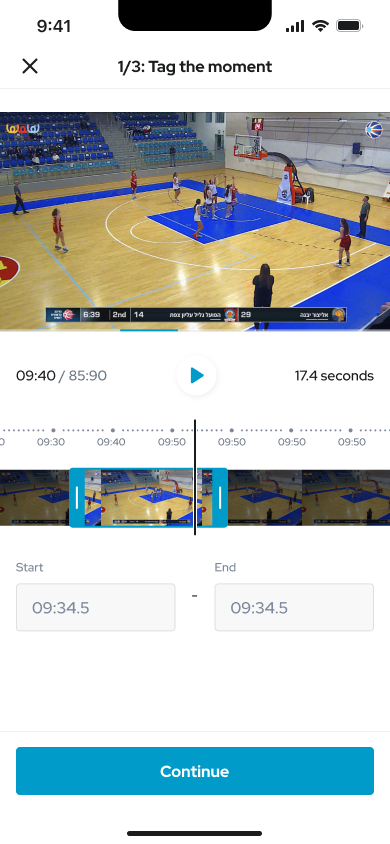
Video and analytics workflows
AI-assisted flows for coaches and athletes
Mobile vs. desktop task distributions
High-Fidelity Prototypes
Developed interactive prototypes simulating complete end-to-end scenarios:
Coach reviewing game performance
Athlete accessing personalized highlights
Parent tracking their child’s progress
Admin managing team and content
AI Integration — Tactix Assistant
Designed flows for the integrated AI assistant that helped:
Coaches analyze games, detect patterns, and get tactical suggestions
Athletes generate highlight reels and personalized improvement playlists
Teams understand areas of improvement faster and more accurately
Design & Functionality
Role-Adaptive Interface
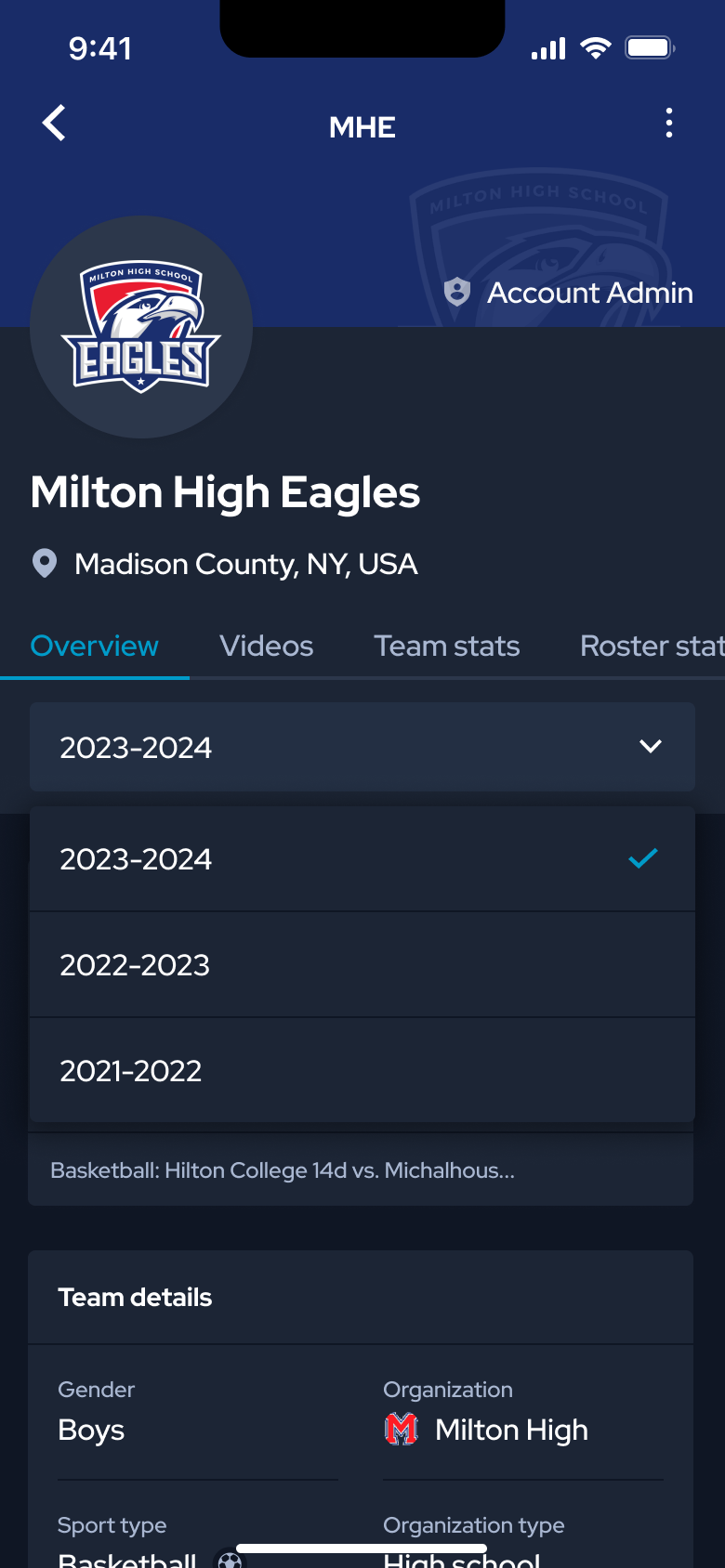
The UI dynamically adapts to the user’s role, emphasizing the most relevant tools and content.
Modular White-Label Architecture
The interface supports dozens of forks with unique:
Branding
Navigation
Feature toggles
Regional requirements
Unified Mobile & Desktop Experience
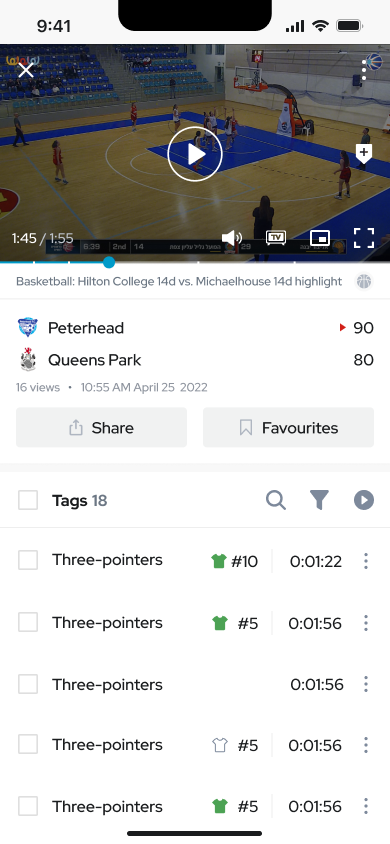
Mobile → athlete-focused, quick-access, personal
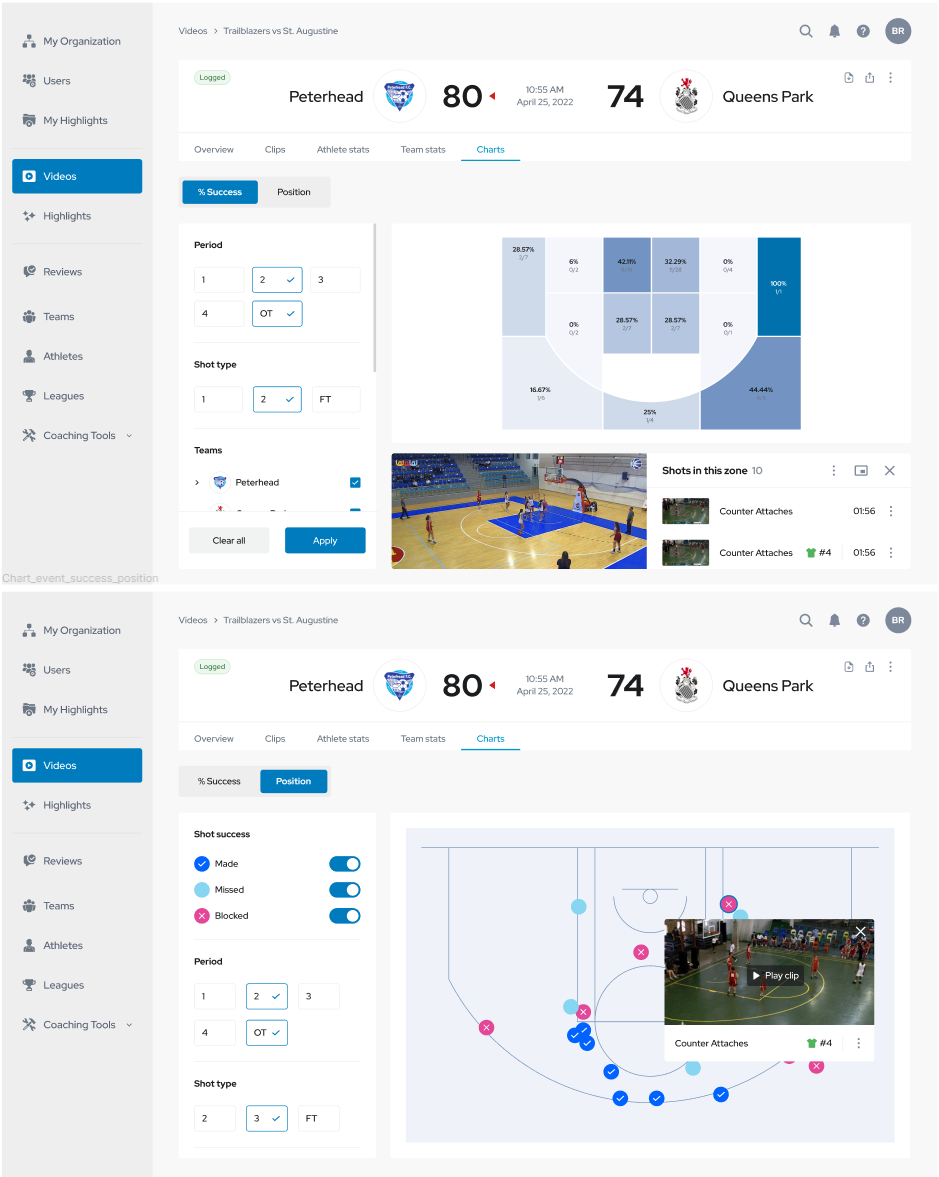
Desktop → coach-focused, analysis-heavy, data-rich
Massive Design System
I created a large-scale, automated design system that was:
Deeply integrated into frontend code
Fully tokenized
Modular
Scalable for white-label needs
Supported fast development with minimal engineering overhead
This dramatically reduced maintenance costs and eliminated inconsistencies across forks.
RESULT
A unified, scalable, and role-adaptive sports platform
The final solution:
Delivers a cohesive experience across desktop and mobile
Supports multiple roles and drastically different use cases
Scales across continents, leagues, and skill levels
Integrates advanced AI analysis features
Greatly reduces engineering support needs
Enables faster creation of new white-label versions
The platform is now actively rolled out across the US and Europe, with positive feedback from coaches, athletes, and administrators.
…is a role-adaptive system designed for coaches, athletes, and parents. It provides advanced tools for video analysis, personalized highlights, tactical insights, and athlete tracking across both mobile and desktop. Built to support extensive white-label customization for schools, clubs, and regional sports organizations, the application offers a unified yet flexible experience powered by a scalable design system and integrated AI assistant to enhance training, strategy, and player development.